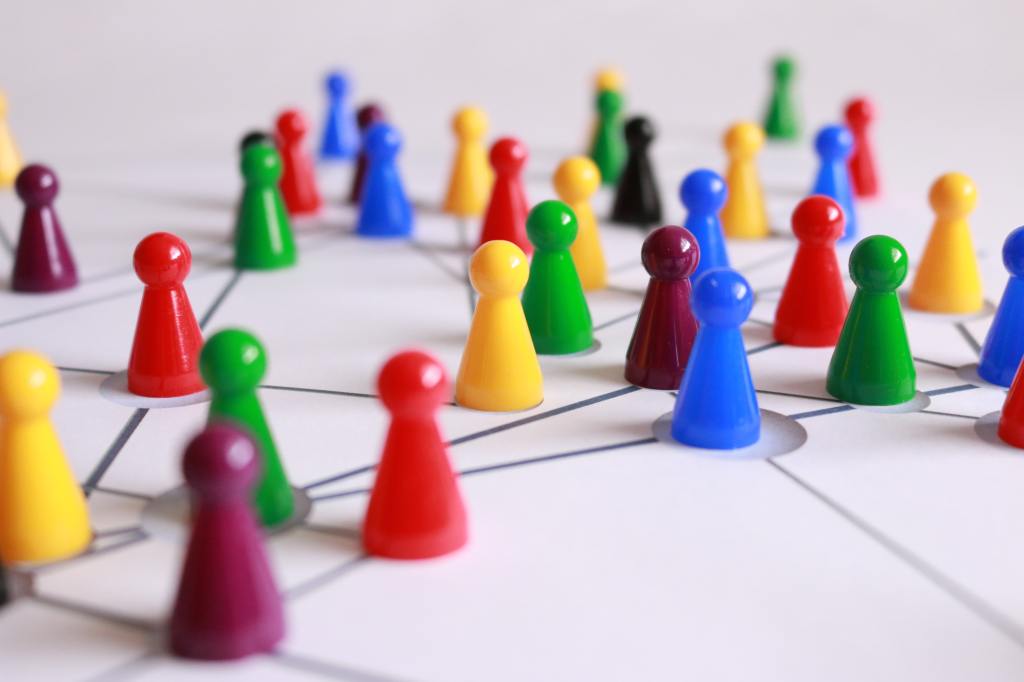
Network effects (NE) is a phenomenon whereby a product or service gains additional value as more people use it. It is what goes on behind the scenes (like an invisible hand, or wind) that make businesses like Google, AirBnB, eBay and Facebook such defensible businesses.
NE is 1 of 4 defensibilities that a business can build It’s about adding value to users, making the business more defensible (or a moat). At a point where there is critical mass, it can offer increasing returns to scale. Other more traditional defensibilities are Scale, Embedding and Brand, and these usually taper at some point, with decreasing returns to scale.
NE is not the same as Viral effects, which is about user acquisition and growth. This is about retention and adding value to users and it provides a leverage to growth and defensibility.
NfX has defines 15 different types of NE and it’s worth considering how to add this into the designing of your business.
For those that are interested to learn more (1) Great articles – NFX has provided an excellent resource of their thoughts/ learnings at www.nfx.com. Another great resource is https://platformchronicles.substack.com/.
(2) An upcoming course – those that are looking for a course to attend to discuss and go more in-depth on these concepts could explore the “Building and Investing in Network Effects” by Andrei Hagiu and Julian Wright. They are having a 2nd run in February with the sign up here. I attended the 1st run in late 2021 and it was very insightful, I highly recommended it.
In the previous months, and especially so during the confined days of Singapore’s circuit breaker (or lockdown), food delivery platforms such as GrabFood, Food Panda and Deliveroo quickly rose from a convenience service to one of necessity, as the government restricted the movements and gathering of people with exceptions of certain necessary activities. The control measures has eased somewhat, but as I still observe significantly more food delivery scooters/ bikes/ motorbikes on the roads (compared to pre-covid), I think it is worth looking further into how this business has changed within this season.
1. Food delivery’s rising in importance and how does it fit in Grab?
Just in Dec’19, Grab’s food delivery and financial services generated more than 50% of gross merchandise volume (GMV), or sales transacted, across its platform. With the coronavirus impact and the sudden shift in consumer behaviors – more time at home (instead of traveling to work) and more convenience sought (and less movements outdoors) – this led to ride hailing reducing to a minimum level and food deliveries and e-commerce deliveries increasing by a correspondingly large amount.
The net effect was GrabFood become a very important part of Grab in the course of a few months – even more so than the original core business ride hailing. Grab was able to use their platform to somewhat meet the demand by adapting their service from moving people (ride hailing) to moving food (food deliveries) and goods (e-commerce deliveries). Imagine what it would have been if food deliveries weren’t established as a category at this point!
What Grab did was no small feat which I think highlights their ability to adapt and pivot, which would be increasingly important in the days ahead. According to CEO Anthony Tan (paraphrased), “the switch involved moving 149,000 drivers in a period of over two months from what they were used to — sending people to from place to place every day — to delivering food and shopping for 50 cities across 8 countries.“
There is a permanent (and accelerated) shift to digital– but who would be able to capture that value? NYU Professor Scott Galloway aptly termed the coronavirus an accelerant, as compared to the change agent itself, but went into detail as to how the Big 4 Tech Companies (Amazon, Apple, Google and Facebook) are “gaining more and more momentum and strength”, impacting various industries such as e-commerce, healthcare, education and media. In this particular case for Grab, CEO Anthony Tan commented in an interview with Fortune that he too saw a permanent shift in the use of e-commerce and e-payments, as their new users started to include older demographics (aged 35-55 and across the population). But for businesses like Grab and Uber where the core business of ride-hailing is severely challenged by travel restrictions, it might be a challenging period ahead for them to still be as ubiquitous and grow and increase in usage and influence.
2. Understanding Grab as a platform, or “super-app”. And the future of venture-backed companies in this new operating environment
Grab has started to established itself as a superapp and was making good traction just prior to the covid outbreak. It had built itself into one of the top consumer internet companies in Southeast Asia with various services such as food delivery, payments, health care, and financial services alongside ride hailing with rides in Southeast Asia, serving more than 187 million users in over 300 cities regionally.
Just prior to the coronavirus causing business and societal disruptions, what occupied news headlines in 2018 and 2019 in Tech regionally was the discussion on Grab vs. Gojek. This started since Uber’s retreat from SEA in Mar’18 and across the periods of massive fundraising rounds in the past 2 years where public comparisons of business traction was made for Grab and Gojek had raised $5.2Bn and $1.6Bn respectively to expand its products and grow regionally as a digital platform.
To succeed in this new operating environment, there needs to be further change in the approach, no longer one of aggressive growth typical of a venture-backed startup to be one that balances both the growth agenda and figuring out a clearer path to profitability and sustainability. This at the moment seems to include, exploring merging with Gojek to effectively corner the Indonesian market, and some headcount reductions (360 staff or 5% of total headcount) probably more as a signal to the organisation of the likely tougher times ahead and bidding for a digital banking license, currently a 60-40 JV with Singtel.
3. How are the fees split for GrabFood amongst its stakeholders? And can it provide a sustainable job for its riders? There has been a big debate on the delivery fees split amongst its different stakeholders – consumers (or users), merchants (F&B owners), rider-partners and Grab. The fundamental question is whether this is a fair fee to the merchants, and whether the delivery fees add up to a fair salary for riders. You could be able to read up more on this on The Straits Times (“Food delivery fees in spotlight“), Mothership (“Grab allegedly pocketed 50% of the cost of a food order made over GrabFood. What happened here?“) and on Grab’s own blog response (“#AskGrab: Where does the merchant commission go?“), but in the meantime I would provide a snapshot below.
The fees charged by Grab to merchants seems to be on average 25-30% of the order value, and at times up to 50%, this is separate from a delivery fee that is charged (that is distance dependent). I guess this is where the issues are – the merchant is already challenged by the high rentals, and no longer has the previous customer volume and spending, without taking into addition to additional costs in the current covid period. So what happened was probably a boost in business orders but at a loss situation. Merchants have petitioned to reduce this markup fee to closer to 15% (which has not happened), but Grab has responded by highlighting that the markup fee is in effect fair as it is at present given to riders as incentives to supplement the take home income.
4. Growth in the rider base network during the current times
During the months of the circuit breaker, there has been no problems with the food delivery platforms expanding their pool of talent, with Deliveroo reporting an 80% increase in rider applicants in April compared to March, and an increase in rider pool by 1000 to 7000. This is probably a reflection of the current difficult business environment and job market, adding on to good consumer branding and flexibility that these companies had built previously.
While this is good for many in the interim in between jobs, for those who have further aspirations for progression, such jobs inevitably does take a lot of time and energy, and is not straightforward in allowing one to effectively develop a good career pathway and progress in terms of skills to better differentiate and earn a better salary as the years build on. This is worth further thinking from the government and Tech companies as they build a sizeable workforce under this tag of a partner/ freelancer, and in any case for further thinking and planning for those who are working in such jobs.
5. Summarising – What have we learnt? What can we expect from here?
Food delivery is growing and very important in this age of increasing need for convenience and also safety (less societal exposure). One can make a living from this at a decent salary for hard work, but one has to think longer term if it would make sense.
In the meantime it would be challenging times for Grab looking ahead as they try to strike that balance both the growth and survival/ sustainability agendas. We can probably expect interesting product innovations to continue to happen in GrabFood and other platforms, designed to bring value to its various key stakeholders and the deepen users engagement/ stickiness in using the platform.
Some of those I have noted or ideated are as followed:
(1) Central kitchens (or virtual/ shared kitchens) – which are shared and centralised kitchens for eateries, specially designed for cooking and pickups, and to minimise wait times for delivery riders. These have been so far implemented by all 3 food delivery players (Deliveroo (3), Food Panda (1) and Grab (1) and also independents such as Smart City Kitchens (which is apparently linked to former Uber CEO Travis Kalanick). This might be interesting as they are natively designed for such delivery platforms and could be very efficiently plugged into them
(2) Onboarding of even more F&B outlets – these include the various restaurants, cafes, food kiosks in the shopping malls, and even hawker stalls. Hawker stalls in particular would be interesting as it can increase the number of food options and locations significantly. Grab has kickstarted this in May’20 and called this ‘“Hawker Centre 2.0” pilot initiative‘, allowing users to choose from a variety of stores located in the same area, for the same delivery fee – a play on both convenience and value (to users) and business at lower costs (to stall owners).
(3) Launching GrabProtect – Grab took the opportunity to launch this partnership with Unilever, tapping on their products and and touch points to enhance their brand image, and enhance the safety of Grab drivers and riders plus connect more small businesses onto the platform.
(4) Bringing on the older, less tech-savvy users – in the ideal world, we would be able to address “the long tail”, which in this case be the older demographics within our society. It would be an important achievement if they could be educated to be more tech-savvy and be able to order both food and also groceries online, especially if there should be cases of further lock-down measures in the future when borders open up again.
(5) Other ideas that increase value and deepen engagement + usage from existing users such as (i) “gifting” – where you are able to buy another person a treat quite easily, and maybe provide a nice printout or message across from one user to the next, or (ii) catering to meals for virtual work team meetings or training (distributed one order to many recipients). I haven’t seen these being implemented, but I think there should be sufficient demand for such in this covid period, given there would likely be restrictions to large group gatherings for the foreseeable future (till covid control measure ceases).

 Thoughts on Business, Technology and Life